Wednesday, 5 October 2022

Cadw - Chepstow Castle

As Hubby and I are now in our third year of membership with English Heritage we can enjoy free admission to all properties in Wales (CADW),  Scotland (Historic Scotland) and OPW (Ireland).

On our recent trip to Cardiff we visited Tintern Abbey,  Chepstow Castle and Raglan Castle. I have blogged each property separately and although my photos show just how superb the properties are I have added notes taken from the Cadw website.

Our second visit was to Chepstow Castle.

Chepstow Castle stretches out along a limestone cliff above the River Wye and is a great example of how castles gradually evolved to cope with ever more destructive weaponry and the grand ambitions of their owners.

For more than six centuries Chepstow was home to some of the wealthiest and most powerful men of the medieval and Tudor ages.

Building was started in 1067 by Earl William Fitz Osbern, a close friend of William the Conqueror. It was one of the first Norman strongholds in Wales but the castle declined after the Civil War.

William Marshal, a soldier who took part in military tournaments, began to attract Royal patrons. The first was Eleanor of Aquitaine and then her eldest son Prince Henry. This gave William enough power to raise his own banner (half green, half gold with a red lion rampant) and have a company of knights.

When Henry was dying in 1183 he commanded the faithful Marshal to take his cloak to the Holy Sepulchre in Jerusalem. Returning from the Holy Land in 1186 Marshal joined the military household of King Henry II and saw constant action in France.

It was Henry’s son, Richard the Lionheart, who rewarded Marshal’s loyalty by giving him the rich de Clare heiress Isabel in marriage. This is where the story of William Marshal and the history of Chepstow Castle began intertwined.

Isabel’s family had held Chepstow and other vast estates for most of the 12th century, and now William had become a chivalrous knight and was one of the richest men in the kingdom. However the castle had barely been touched for 100 years and it was William who brought it up to date building the first twin-towered gatehouse.

William also built a second line of defence, raising the height of the Norman walls and erecting a massive rectangular tower named Marshal’s Tower. The tired old Chepstow Castle became a formidable but suitably comfortable fortress.

William Marshal was one of those left in charge of the country when Richard the Lionheart went on crusade in 1190. He negotiated the Magna Carta on behalf of King John and ruled as regent of England for the young King Henry III until his death in 1219.

His was an extraordinary life and his legacy is preserved in the stones of an equally extraordinary castle, towering over the River Wye at this crucial gateway to Wales.


From the entrance Chepstow Castle looks a reasonable size but once you pass through the twin towers it becomes apparent that it is huge. Not only does it stretch on and on, building after building, but it also goes uphill. It was quite a climb to it's highest part. 

We had a super visit, it would be good to time our next visit with high tide when the River Wye would be higher.

Cadw - Tintern Abbey

As Hubby and I are now in our third year of membership with English Heritage we can enjoy free admission to all properties in Wales (CADW),  Scotland (Historic Scotland) and OPW (Ireland).

On our recent trip to Cardiff we visited Tintern Abbey,  Chepstow Castle and Raglan Castle. I have blogged each property separately and although my photos show just how superb the properties are I have added notes taken from the Cadw website.

Our first visit was to Tintern Abbey.

Tintern Abbey stands in roofless splendour on the banks of the River Wye nearly 500 years since its tragic fall from grace.

Originally a timber building it was founded in 1131 by Cistercian monks, a simple stone church and cloisters came later. In 1269, thanks to the patronage of wealthy Marcher lords, the white-robed monks built a new abbey and created one of the masterpieces of British Gothic architecture. The great west front with its seven-lancet window and the soaring arches of the nave still takes your breath away.

The monks were still handing out alms on his behalf in 1535, but just a year after King Henry VIII’s English Reformation began Tintern surrendered in the first round of the dissolution of the monasteries — and the great abbey began slowly to turn into a majestic ruin.

The abbey ruins lay forgotten until the 18th century when Tintern experienced a second heyday as a major tourist destination.

A popular engraving by the Buck brothers, published in 1732, was the start of the interest, followed by the Reverend William Gilpin’s bestselling account of his Wye River voyage in 1770.

The ivy-covered ruins of Tintern were caught up in a surge of romantic interest in the ‘Sublime’ and the ‘Picturesque’. Travellers who were unable to visit Europe due to the French Revolution and Napoleonic Wars had begun to visit the wild landscapes of Britain instead.

They flocked to the Wye Valley, arriving on small boats laden with picnic hampers. JMW Turner's magnificent watercolours of Tintern were exhibited at the Royal Academy in 1794-95, and William Wordsworth wrote his famous poem ‘Lines Composed a Few Miles Above Tintern Abbey’ in 1798.

By now Tintern Abbey was a bustling tourist attraction, and today the great walls and arches in their setting of wild natural beauty haven’t lost their magic, it's an amazing sight.


We had a superb visit, it was quite overwhelming looking up at such a dominant structure.


Sunday, 25 September 2022

96 Gun Salute

Hubby and I were in Wales when the death of Her Majesty Queen Elizabeth II was announced on 8th September 2022.

We felt honoured to be able to be at Cardiff Castle the following day to witness the 96 Gun Salute tribute to our late Queen. 

It was carried out with such exact precision, an insight into the amazing professionally duties carried out on the day of her State Funeral. 

My words will never fully show just what the surreal moment in time it was ... my photos hopefully will.


God bless the Queen 


Tuesday, 20 September 2022

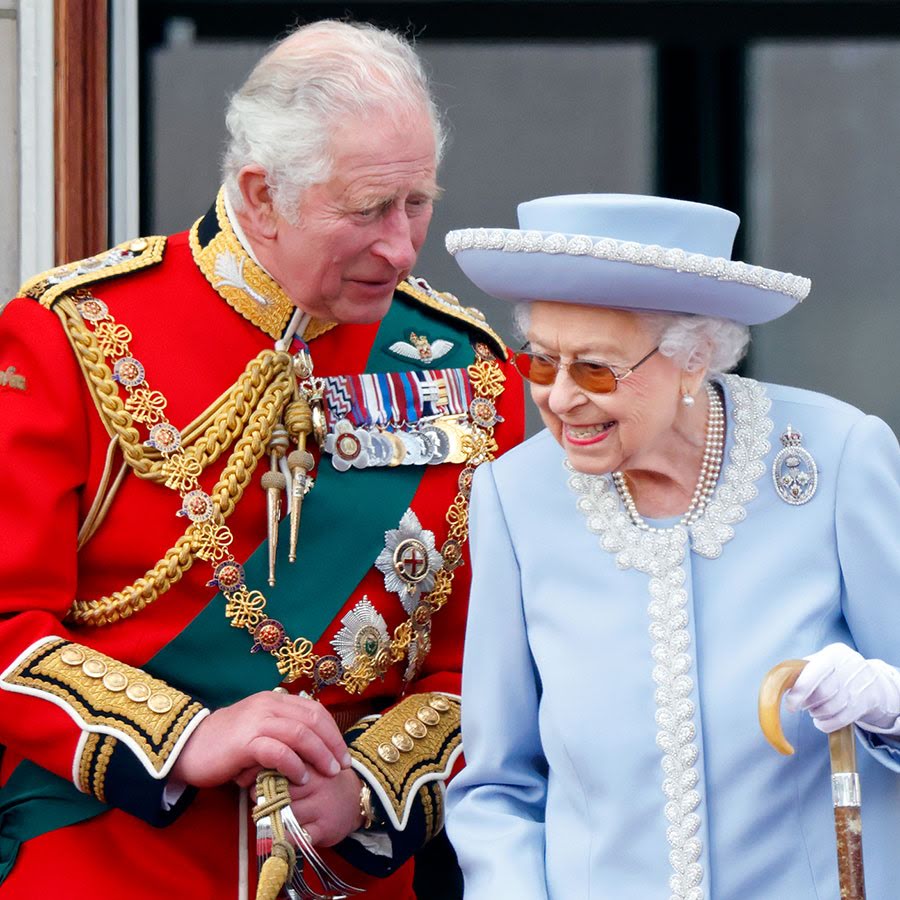
Thank you Ma'am for everything

I, like many, have found the last two weeks unbelievable. It is still find it hard to believe that Queen Elizabeth II is no longer our Monarch. I have served her all my life from the age of seven as a Brownie, then as a Guide, and currently as a Scouter for more than 40 years. 

We all have times to remember, stories to tell: I remember standing by Nuneaton train station waiting to see her, our daughter a baby in my arms and our son a toddler sitting high up on my late father's shoulders.

I remember being at Buckingham Palace when my step-dad received his MBE, mum and I seated in the Ballroom just five rows from The Queen, it was a very surreal occasion.

I also remember sitting in St George's Chapel with my late Dad on St George Day when he received the Silver Acorn for his service to Scouting, and later lining the quadrangle at Windsor Castle to watch the Queen give awards to our amazing young members. 

Yesterday Hubby and I watched all the coverage of Her Majesty's State Funeral, my eyes with continuous tears and my heart heavy. It was a poignant day, the perfect tribute to a wonderful lady who dedicated her life to serve us. 

These are a few special moments:


The precision and grace of all those on parade, the absolute astounding job of the pallbearers from Queen's Company 1st Battalion Grenadier Guards and the Royal Family's dignity and stature whilst obviously in greatest grief made me proud to be British... I felt very humbled. 

Over these difficult days I have been touched by how King Charles III has managed to carry out all that has been required of him: one moment a grieving son, the next the King touring our country's four Parliaments. 

Princess Anne has hardly left her mother's side, escorting her on all journeys. I sincerely hope our Royal Family now have time for themselves and aftering leading us in our grief can grieve in peace for their personal loss, a dearly loved mother, grandmother and great-grandmother. 


Hubby and I paid tribute to Her Majesty by beginning the day with marmalade on toast. Later, when the days events had come to a close, we enjoyed Coronation Chicken followed by my slightly adjusted Platinum Trifle accompanied by a glass of Regent wine.


A day we will never forget: an historic day when we said a fond farewell to our Queen and raised a glass of Royal Lochnagar to our new King

God bless the Queen - God save the King